
Guarujá's Historic Landmarks
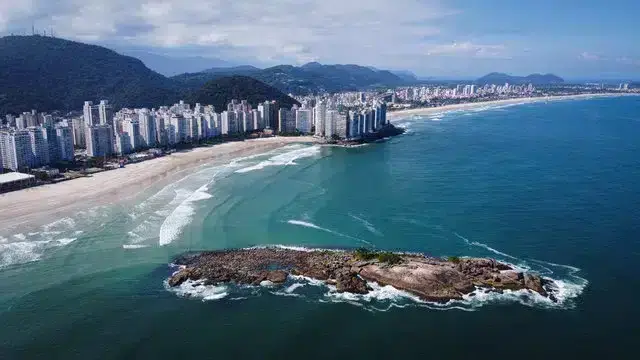
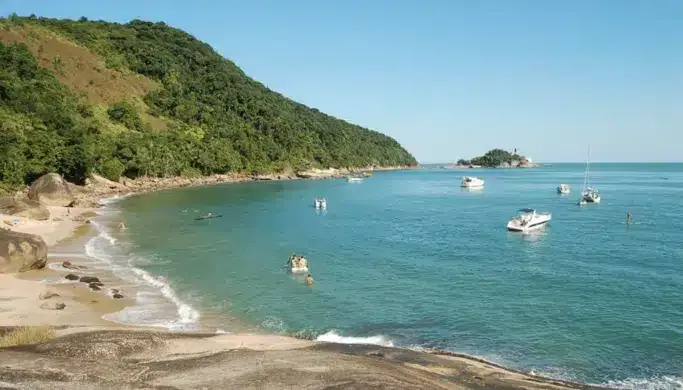
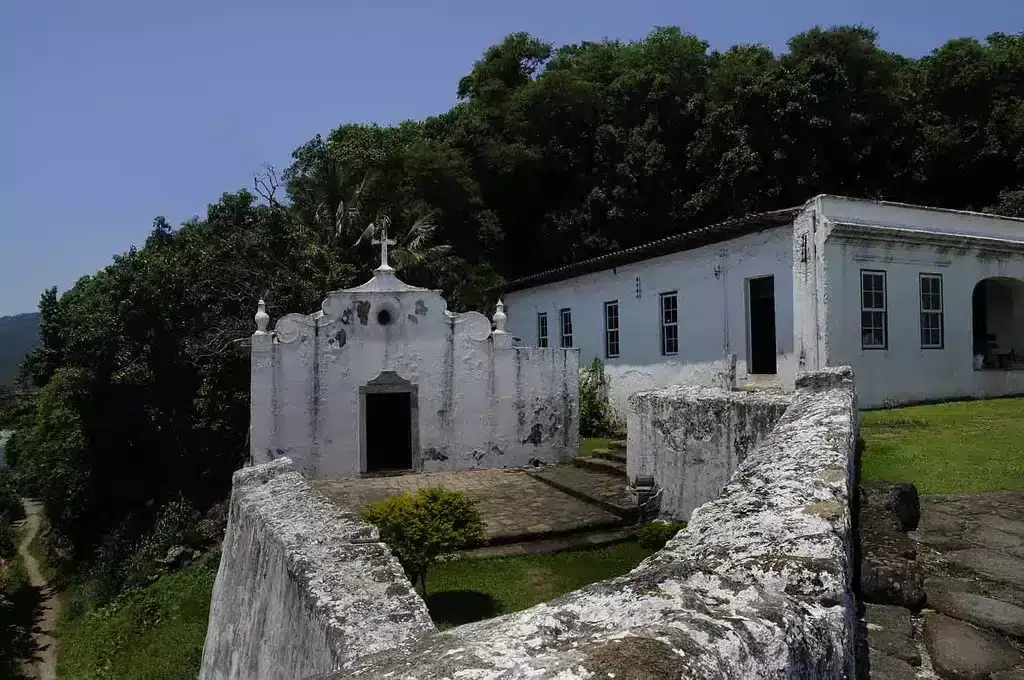
Guarujá is known for its (very popular) beaches, but this city of nearly 300,000 people has much more to offer. Also known as “the Pearl of the Atlantic,” it has beautiful views, historic sights and more. Here are some of Guarujá's heritage sites.
Fortaleza de Santo Amaro da Barra Grande
Also known as the Fortaleza de São Miguel, Fortaleza da Praia Grande or Fortaleza da Barra Grande, this historic fortress was built starting in 1584, after English privateer Edward Fenton attacked Santos.
Its original design is attributed to Italian military architect Giovanni Battista Antonelli. More than a century later, in 1711, a Santos resident named Manuel de Castro de Oliveira offered to pay for rebuilding and arming the fortress, and the Portuguese Crown accepted in 1715. In 1765, a new round of works began under Captain General Luís Antônio de Sousa Botelho Mourão, then governor of the captaincy of São Paulo.
Over the years, the fortress also served as a political prison. It played a key role in defending the region's coast and was only disarmed in the 20th century. Last restored in 1997, it is now open to visitors and is protected by IPHAN, Brazil's national heritage institute, as a national historic landmark.
Forte dos Andradas
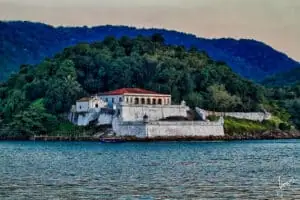
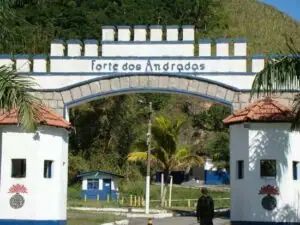
Between the Tombo and Jardim Guaiúba neighborhoods, this military complex sits within a large protected area of Atlantic Forest. Completed in 1942, during World War II, it features military architecture and galleries carved directly into the hillside rock to hide the gun emplacements.
During Brazil's military dictatorship, the complex held political prisoners, including Eduardo Collen Leite, who was killed inside the fort.
Today it houses the headquarters of the Brazilian Army's 1st Anti-Aircraft and Coastal Artillery Brigade for the South and Southeast regions.
Maria Fumaça Pavilion
Downtown, the Maria Fumaça Pavilion houses the locomotive of Guarujá's old train, which for decades carried passengers between downtown and the ferries to Santos — a reminder of the early days of tourism on the island.
Nossa Senhora de Fátima e Santo Amaro Parish
Downtown, the church dedicated to Our Lady of Fátima and to Santo Amaro, the island's patron saint, dates from 1957: it was rebuilt after a fire destroyed the previous church. According to local tradition, the statue of Santo Amaro survived the fire intact — and you can still see it today.
More landmarks to see
- Guaibê chapel ruins: a 16th-century chapel near Prainha Branca, reached by trail — see the cultural tourism itinerary.
- Arvoredos Island: a historic and natural heritage site with scheduled visits — see Arvoredos Island.
Visiting
Forts and museums keep their own days and hours — Forte dos Andradas follows Army rules — so check before you go. From Hotel Doral Guarujá, on Enseada Beach, all of these sites are a short drive away, and you can be back in time for the pool in the late afternoon.
Frequently asked questions
What are Guarujá's historic landmarks?
The main ones include the Fortaleza de Santo Amaro da Barra Grande, from 1584 and protected by IPHAN; Forte dos Andradas, from the World War II era; the Maria Fumaça Pavilion; and the Nossa Senhora de Fátima e Santo Amaro Parish.
Is the Fortaleza da Barra Grande open to visitors?
Yes. Restored, the fortress welcomes visitors and has exhibition spaces on the region's history. Check days and hours on its official channels before you go.